
We’re looking for tahini to prepare hummus or a sauce, pushing the cart down the aisles, and going in circles. The jar is never where we expect it to be. This sesame paste hides in different sections depending on the store, and even based on the size of the shop. Here’s how to spot it without wasting twenty minutes.
Tahini in supermarkets: the aisle that changes depending on the store
The first instinct is to rush to the oils or peanut butter aisle. Logical: tahini is a nut paste. In some hypermarkets, it can indeed be found there, wedged between almond butters and organic spreads.
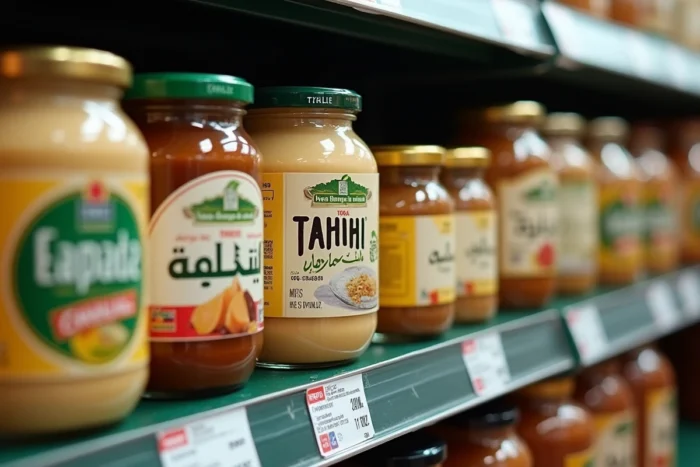
The problem is that the majority of stores classify tahini in the “world products” section, alongside Eastern spices, coconut milk, or Asian sauces. This “world cuisines” segment is increasingly structured in French supermarkets, prompting stores to group these items in a dedicated space rather than dispersing them.
You can also find it in the organic section, especially in Leclerc, Auchan, or Intermarché, which have an expanded organic space. Brands like Senfas or Jean Hervé offer organic tahini in glass jars, often next to hazelnut and cashew butters. To know exactly where to find tahini at Leclerc, Intermarché, or Auchan, feedback varies depending on the size of the store and the local merchandising organization.
A third, less intuitive option: the self-service deli or appetizer section. Some stores place tahini near packaged hummus, fresh falafels, or refrigerated mezze. This placement is still minority, but it’s worth a look when the first two aisles yield nothing.
Organic aisle, world aisle, or nut paste aisle: how to decide quickly
Rather than wandering through the entire store, you can apply a quick method based on the type of store.
Hypermarkets Carrefour, Auchan, Leclerc
These chains almost all have a separate “world cuisines” section. That’s where to look first. The Durra brand (tahini in plastic bottle) frequently appears there, sometimes next to chili pastes or pomegranate molasses.
If the store has a structured organic section, also check the organic nut butters space, where tahini is found alongside almond and whole sesame butters. Both locations often coexist in the same hypermarket, with different ranges.
Supermarkets Intermarché, Super U, Monoprix
In medium-sized stores, the “world products” section is sometimes reduced to half a shelf. Tahini is still listed there, but with only one or two references. Monoprix tends to place tahini in the fine grocery section or near organic products, in a mixed shelf.
Specialized organic stores
Biocoop, La Vie Claire, and Naturalia have developed structured Eastern corners. Tahini is found in direct adjacency to spices or the fresh deli section, making it easier to spot. The range is broader there (white tahini, semi-complete, complete) and often in glass jar format.
Tahini unavailable in stores: concrete alternatives
When the shelf is empty or the reference doesn’t exist in the nearest store, several options work.
- Oriental and Lebanese grocery stores stock tahini permanently, often in large formats and at a price per kilo significantly lower than that of supermarkets. This is also where you find the most commonly used brands in Middle Eastern cooking (Al Arz, Durra, Al Taj).
- Asian grocery stores sometimes offer sesame paste, but be careful: Asian sesame paste is often made from more intensely roasted seeds, which gives a stronger flavor and a darker color. It works in a dan dan mian, but less so in classic hummus.
- Drive and home delivery allow you to filter by the keyword “tahini” or “tahin” directly on the Carrefour, Auchan, or Leclerc websites. You can check availability without going out, and the product is often listed more clearly online than in the physical aisle.
Organic or conventional tahini: what really changes in the aisle
The choice between organic and conventional is not just about the label. Organic tahini uses sesame grown without pesticides, often imported from Ethiopia or Sudan. Sesame seeds are among the major allergens regulated in Europe, and the supply chain has experienced recall episodes in France.
A national recall involved packets of sesame seeds contaminated with a pesticide, sold at Auchan, Carrefour, Intermarché, Leclerc, and Système U. The official recommendation was not to use them in homemade preparations like hummus or tahini. This type of incident pushes some consumers towards organic as a precaution, even though there is no zero-risk in any supply chain.
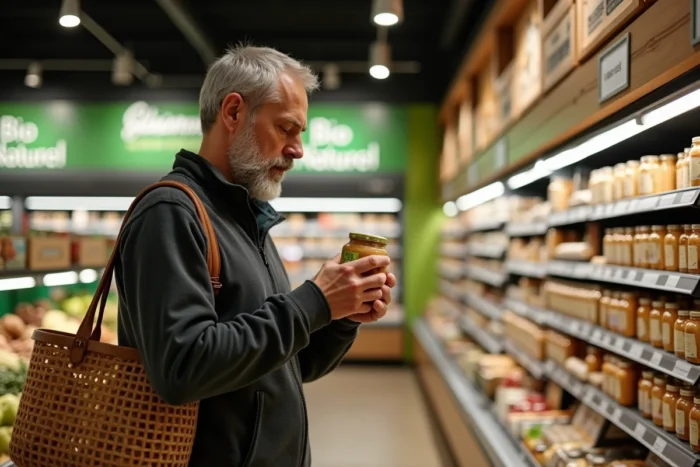
In the aisle, conventional tahini often comes in plastic bottles (Durra format) priced between two and four euros. Organic tahini in glass jars is significantly more expensive, but the quantity is sometimes smaller. Reading the label remains the most reliable action: the ingredient list of good tahini contains only one word, “sesame”.
Sesame seeds and homemade tahini: an underestimated option
If no aisle satisfies, you can make your own tahini from hulled sesame seeds. You can find them in the bulk section, the spice aisle, or the bakery section (packets for decorating breads).
The method is straightforward: lightly toast the seeds in a pan, then blend them with a drizzle of sesame oil or neutral oil until you achieve a smooth paste. A good blender or a powerful food processor is sufficient. The result is fresher than any industrial jar, and the cost per kilo of bulk sesame seeds remains very competitive.
Homemade tahini keeps for a few weeks in the refrigerator in an airtight jar. The oil naturally rises to the surface; just mix before each use. For recipes of hummus, sauces, or sesame dressings, the flavor obtained is well worth the detour to the bulk aisle.