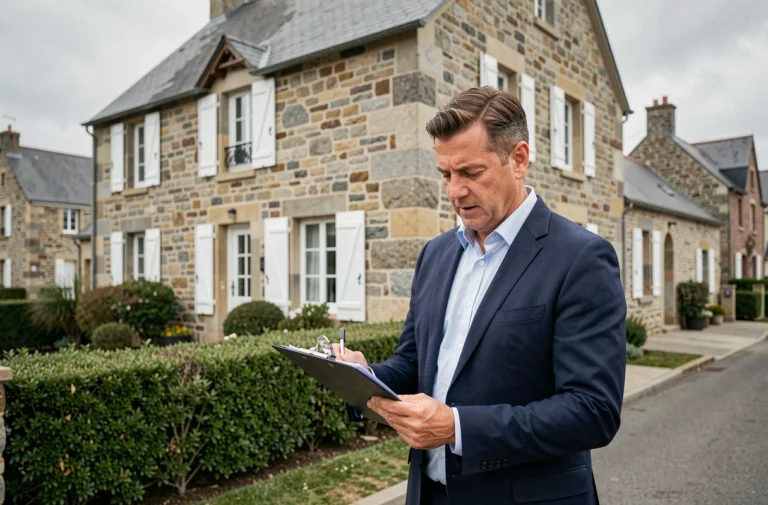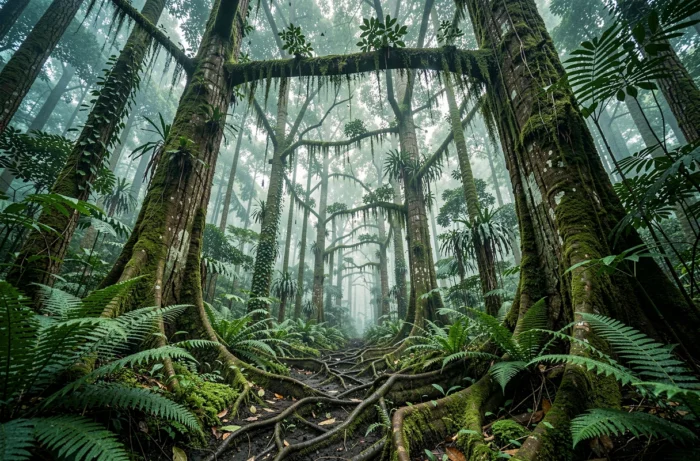
On the ground, classifying an environment into a clear category often proves to be a puzzle. Is a forest that has been exploited for centuries still a natural environment? Does an urban park planted with local species become a full-fledged ecosystem? To clarify, we distinguish four main types of environments whose characteristics condition biodiversity, available resources, and human activities that unfold within them.
Natural environment and modified environment: an increasingly blurred boundary
When traversing a forest massif in France, the first practical question is to determine the degree of human intervention involved. A natural environment, in the strict sense, refers to a setting where physical and biological processes dominate without human management: primary forests, undrained wetlands, coral reefs far from inhabited coasts.
In practice, these intact environments are rare. The majority of spaces labeled as “natural” are actually environments modified by human use: forests managed through regular logging, grazed meadows, rivers with regulated flow. The ecological structure remains visible (living soils, plant layers, local fauna), but agriculture, forestry, or diffuse urbanization have reshaped their functioning.
This distinction between natural and modified is not merely academic. It conditions soil protection measures, water management, and regulatory obligations that apply to activities in a given territory. A detailed presentation of these categories can be found, notably that of environments on Mind Formation, which specifies the classification criteria used in environmental sciences.
Artificial environment: when the setting is entirely designed by humans
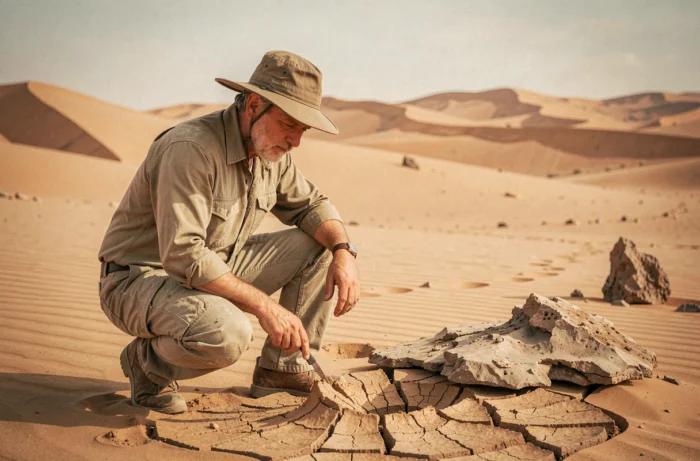
A logistics center, a highway, an industrial complex: these spaces no longer resemble an ecosystem in the biological sense. We refer to an artificial environment, or “man-made” in recent Anglo-Saxon typology. The soil is sealed, vegetation is absent or purely ornamental, and natural cycles of water and nutrients are interrupted.
This type of environment poses concrete problems of pollution and resource management. Runoff water no longer infiltrates, heat islands intensify, and local biodiversity declines. In France, soil artificialization remains a central issue in land planning policies.
An often-overlooked intermediate case: intensive agricultural space
Large plots of cereal monoculture illustrate the gray area between modified and artificial environments. The soil still exists, organisms live there, but the simplification of ecosystems (disappearance of hedges, massive use of inputs) brings these environments closer to a nearly industrial functioning. The soil remains the discriminating criterion: as long as it retains measurable biological activity, it remains classified as modified.
Aquatic, terrestrial, and atmospheric environments: the three physical compartments
Beyond the natural/artificial axis, environments are also classified according to the dominant physical compartment. This framework is useful when working in the field, as it dictates operational constraints.
- The aquatic environments (oceans, lakes, rivers, wetlands) concentrate the majority of known species and regulate the climate on a global scale. Their primary characteristic: the density of the medium imposes radical physiological adaptations on the organisms that live there.
- Terrestrial environments (forests, meadows, deserts, mountains) are distinguished by the nature of their soils and their plant cover. Water availability remains the main limiting factor for biodiversity.
- The atmospheric environment, less often mentioned, plays a direct role: air composition, wind patterns, and the transport of pollutants and particles condition the health of the ecosystems located below.
These three compartments never function in isolation. A mountain forest depends as much on the quality of groundwater as on the local atmospheric composition. Feedback on this point varies across disciplines, but the current trend in ecology is to reason in terms of interactions between compartments rather than in watertight categories.
Stability and disturbances: the criterion that classic classifications ignore
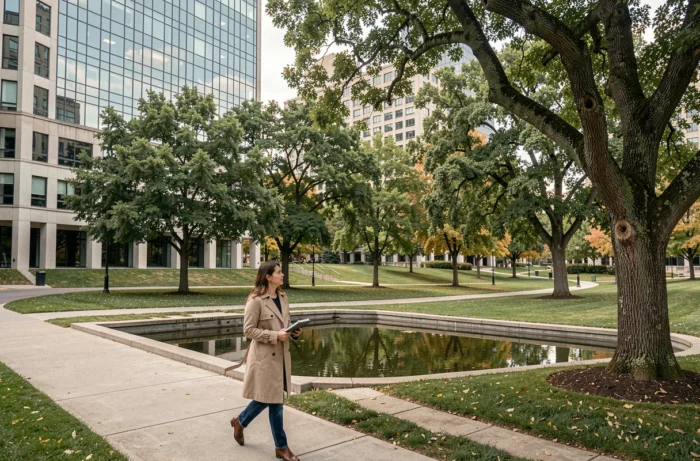
In recent years, an additional dimension has emerged in the characterization of environments: their degree of stability in the face of disturbances. A tropical coral reef and a boreal peatland are both natural aquatic environments, but their resilience to climate change is not comparable.
In practice, we now evaluate an environment not only by its type (natural, modified, artificial) and its physical compartment (water, land, air), but also by its capacity to absorb a shock without tipping into a degraded state. A forest soil rich in organic matter withstands prolonged drought better than a soil impoverished by decades of plowing.
What this changes for the management of environments
Integrating stability into classification forces a rethink of conservation priorities. Protecting a stable natural environment (an ancient forest on deep soil) does not require the same resources as maintaining a fragile but species-rich environment (a coastal wetland subject to erosion). The type of environment alone is not sufficient to define a management strategy.
The four main types of environments—natural, modified, artificial, and their variations by physical compartment—remain an operational framework for understanding. The nuance that makes a difference on the ground is to systematically add the question of dynamics: is this environment degrading, stabilizing, or regenerating? Without this perspective, we classify static landscapes while ecosystems are constantly in motion.