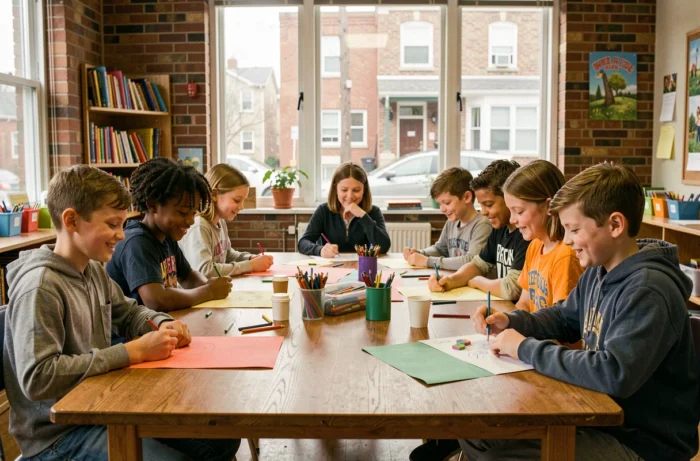
A child who misses their school start because their family couldn’t buy supplies is a dropout that begins in silence. Offering a better future to underprivileged children rarely comes through grand speeches: we act on specific, often invisible barriers, where solidarity concretely changes a child’s trajectory.
School supplies and hidden costs: the first wall to break down
When we talk about access to education, we think of schools, teachers, programs. On the ground, the most immediate barrier is often more trivial: the cost of notebooks, shoes, and meals. These expenses, accumulated over a school year, are enough to exclude a child from the system.
Grassroots organizations focus their efforts on this lever. They collect materials, fund meals, and cover registration fees in countries where public schooling remains paid. This direct provision work, less publicized than large campaigns, produces measurable results: a child equipped is a child who stays in class.
In Belgium, organizations like those presented on souriresdenfants.be intervene with vulnerable families to meet these concrete needs, from academic support to extracurricular activities that maintain social ties.
Child protection in solidarity programs: the safeguarding framework
Sending funds or materials is not enough if the beneficiary children are not protected within the very programs that assist them. This is an angle that most solidarity guides never address, and it’s a problem.
Safeguarding policies have become a marker of seriousness for any organization working with minors. In 2025, UNICEF formalized a strengthened safeguarding policy to reduce the risks of abuse, exploitation, and harm related to humanitarian programs. This framework shifts the focus from mere material aid to the safety and accountability of organizations.
Specifically, before supporting an organization that works for children, one can check several points:
- Does the organization publish a child protection policy accessible on its website, with clear reporting procedures?
- Are volunteers and staff in contact with minors trained on the risks of violence and exploitation?
- Is there an independent complaint mechanism accessible to the children themselves or their families?
These criteria are not theoretical. They separate reliable organizations from those that operate on goodwill without safeguards. A donation directed towards an organization without a protection framework can worsen the situation it claims to resolve.
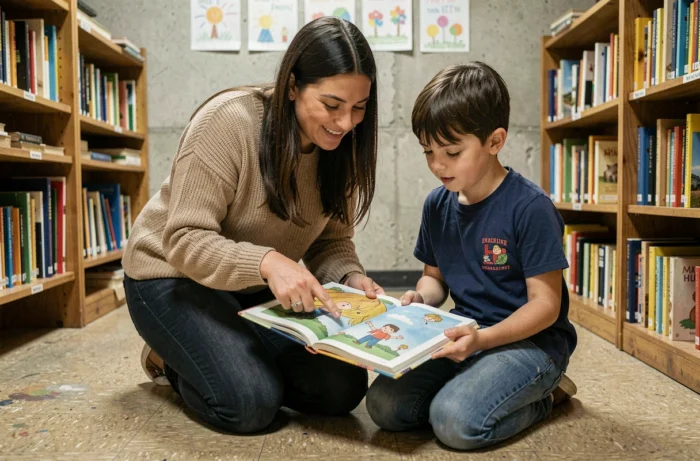
Funding childhood solidarity: where donations really go
The Giving USA 2026 report reveals a clear trend: support for human services and education is growing in philanthropy, but unevenly across subsectors. Projects related to child health or schooling attract more than other causes, which are more volatile in their funding.
For those of us looking to direct our solidarity, this data changes the game. Not all needs of underprivileged children receive the same financial attention. Protection against violence, psychological support, and assistance for single-parent families remain underfunded compared to pure education.
Choosing a project rather than a general cause
Giving “for children” is vague. One obtains a more readable impact by targeting a specific project: building a classroom in a given country, covering school meals for a year, funding hygiene kits for families without stable housing.
Feedback on this point varies among organizations, but those that publish detailed activity reports allow donors to track the actual use of funds. Demanding financial transparency is not distrust; it is common-sense solidarity.
Volunteering with vulnerable children: what the field requires
Direct volunteering with vulnerable children cannot be improvised. One does not just show up at a reception center or a priority neighborhood school with only goodwill. Serious organizations train their volunteers before any contact with minors.
This training covers at least relational posture (not creating an emotional dependency), legal reporting obligations in cases of identified abuse, and the limits of the volunteer’s role compared to child protection professionals.
One-time or regular commitment: two different logics
A supply drive before the school year mobilizes many people for a few days. Weekly academic support requires a commitment of at least six months to be useful to the child. Alternating between the two according to one’s availability is possible, as long as one does not promise a regular presence that they cannot maintain.
- One-time: collections, solidarity events, sorting material donations, participating in family outreach
- Regular: academic support, mentoring, homework help, leading creative or sports workshops
- Remote: financial sponsorship, translating documents for international organizations, volunteer administrative management
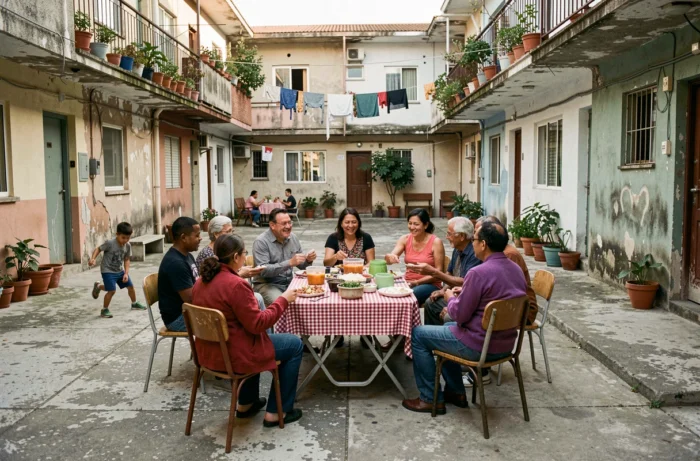
Humanitarian crises and children: growing needs against declining resources
UNICEF documents an increase in the number of children needing humanitarian assistance in recent years, combined with a contraction of available resources to respond. This gap between needs and means primarily affects conflict zones and countries hit by repeated climate disasters.
Local and international solidarity must adapt to this budgetary tension. Grassroots organizations working in these contexts continuously adjust their programs, prioritizing either nutrition or emergency schooling, depending on what is most lacking at any given moment.
For donors and volunteers in Europe, this means that sustained long-term engagement matters more than a one-time surge after a media-covered disaster. Underprivileged children do not need seasonal solidarity: they need support that lasts over several school years, several seasons, several crises.