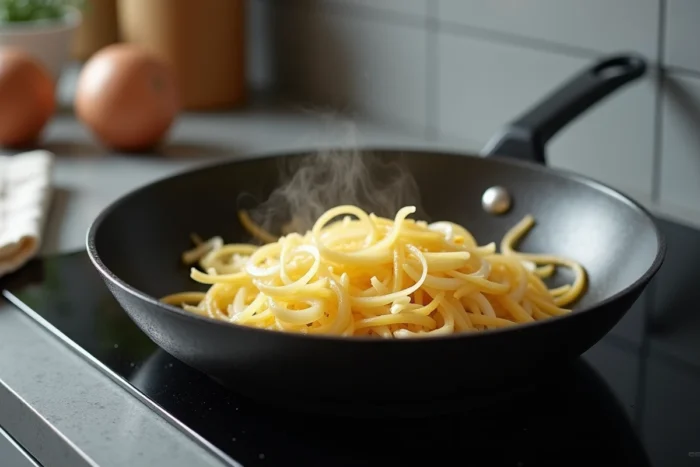
An onion naturally contains sugars and water. These two elements are enough to achieve complete cooking in a pan, without any added fat. The key lies in managing the temperature and humidity that the onion releases during heating. Understanding this mechanism allows for golden, melting onions with a concentrated flavor.
Maillard Reaction Without Fats: Why It Works
The browning of onions in a pan relies on the Maillard reaction, a chemical transformation between the natural sugars and amino acids present in the vegetable. This reaction does not require fat to initiate. It needs heat and direct contact with a hot surface.
The usual role of oil or butter is twofold: to conduct heat evenly and to prevent sticking. By eliminating fat, these two functions must be compensated for by other means. The water contained in the onion then plays a central role.
When sliced onions are placed on a hot pan, their internal water gradually escapes. This steam prevents the onion from sticking during the first few minutes. Once the water has evaporated, the sugars come into direct contact with the hot metal, and browning begins. Knowing how to sauté onions in a pan without fat relies entirely on this two-phase cooking principle: first steam, then dry contact.
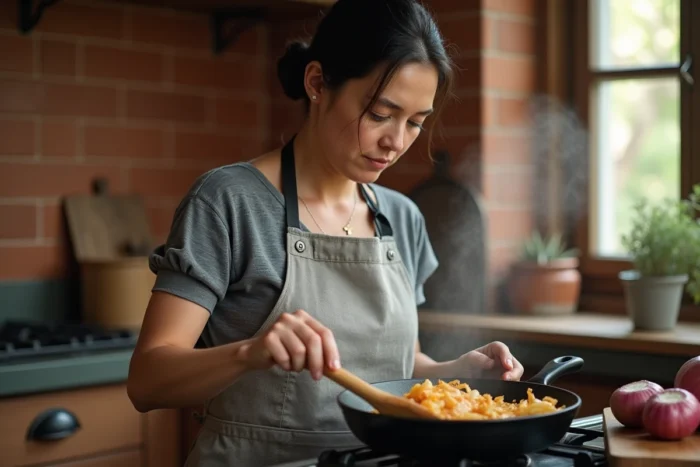
Choosing the Pan for Cooking Onions Without Oil
The material of the pan drastically changes the outcome. Without fat, non-stick coating is the most reliable solution. A good quality Teflon or ceramic pan allows the onions to slide on the surface even without oil.
A stainless steel or uncoated cast iron pan requires more vigilance. The onion will stick as soon as its water has been absorbed by the heat. To remedy the situation, deglaze with a few drops of cold water, which releases the browned bits and restarts the cooking. This deglazing with water is, in fact, a technique in its own right.
Pan Size and Thickness of the Bottom
Using a pan that is too small crowds the onions. They release their water all at once and end up boiling instead of sautéing. The result is mushy and pale. A wide pan with a thick bottom that distributes heat well allows the pieces to be spread in a single layer. This is the condition for achieving even browning.
Temperature Management: High Heat Then Low Heat
The method that yields the best results in cooking without fat follows a precise two-step logic.
- Preheat the pan on high heat for one to two minutes before adding the sliced onions, so that the contact immediately triggers the release of water
- Gradually lower the heat to medium intensity as soon as the onions start to become translucent, to prevent the sugars from burning before caramelizing
- Cover the pan intermittently to trap steam, which maintains sufficient humidity and prevents sudden sticking to the bottom
This technique of searing on high heat followed by gentle cooking with a lid has gained popularity recently, especially through culinary creators who share results like confit onions achieved without any fat.
Stirring regularly without constant scraping is also part of the right gesture. An onion that is stirred constantly never browns. It needs time to form a light golden crust on the side in contact with the metal, then it can be turned.
Deglazing with Water: The Technique for Recovery and Flavor
Deglazing is not reserved for meat. When the onions start to stick to the bottom of the pan (and without fat, this happens quickly once the natural moisture has disappeared), adding a tablespoon of cold water does two things simultaneously.
First, the thermal shock releases the caramelized bits. These brown residues contain a concentration of flavor. By reincorporating them into the onions, a deeper taste is achieved than what cooking with oil would produce. Next, the water restarts the steam phase without adding calories, allowing the onions to continue cooking without burning.
This action can be repeated several times. Each addition of water recovers a new layer of bits and intensifies the flavor. The Marmiton forum mentions this approach as the most reliable for cooking onions in a non-stick pan without fat.
Alternatives to Water for Deglazing
A splash of vegetable broth, balsamic vinegar, or soy sauce can replace water and add an extra aromatic dimension. These liquids remain fat-free and allow for varying flavor profiles depending on the final recipe.
Cutting Onions and Its Impact on Cooking Without Fat
The size of the cut directly modifies the behavior of the onion under heat. Thin slices release their water faster, which speeds up the steam phase and shortens the total cooking time. Thick pieces retain their moisture longer but risk remaining raw in the center if the heat is too high.
For cooking without fat, finely sliced (a few millimeters thick) is the most suitable format. The contact surface with the pan is maximized, the release of water is quick and even, and caramelization occurs regularly.
- Slice thinly for golden, melting onions
- Dice into small cubes for an aromatic base that will blend into a sauce
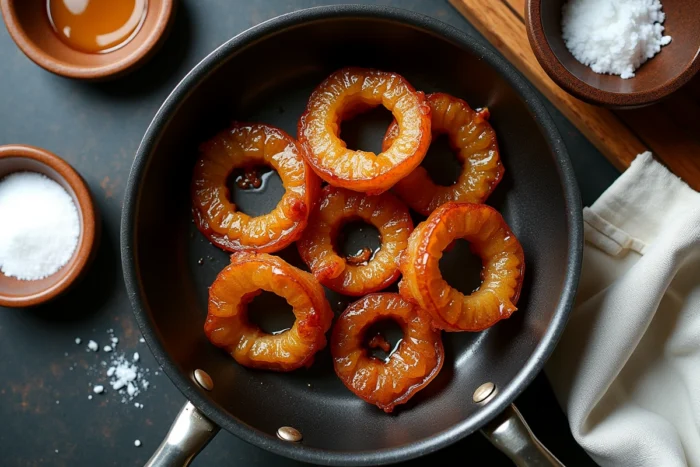
- Cut into thick rings only if the pan is covered and the heat is very low, for slow cooking like confit
The choice of variety also matters. Yellow onions, richer in sugars, caramelize better than white onions. Red onions lose their color during cooking but offer an interesting sweetness.
Eliminating fat from the pan does not mean sacrificing flavor. The combination of a non-stick pan, controlled heat, and successive deglazings with water produces golden onions with an aromatic concentration sometimes superior to a classic butter version. Fat carries flavors in the mouth, but the caramelized bits create their own taste intensity.