
A smooth, creamy purée, without a sweet aftertaste or fibrous texture: this is what people looking to exclude pumpkin from their plates are searching for. The problem is that the majority of online search results consistently lead to squash-based recipes. Effectively filtering these results requires understanding a few simple mechanisms, both on the search engine side and in the kitchen.
Excluding pumpkin from results: the principle of the search operator
When you type “purée recipe” into a search engine, the algorithms favor the most popular pages. Since pumpkin is a key ingredient in autumn cooking, it dominates the top positions.
To bypass this bias, there is a native tool in most search engines: the exclusion operator, represented by the minus sign (-). By typing, for example, purée recipe -pumpkin, you ask the engine to exclude all pages containing that word. You can combine multiple exclusions: purée recipe -pumpkin -butternut -squash removes all members of the gourd family at once.
This filtering is not limited to general search engines. It also works on the internal search bars of certain cooking sites, provided they support Boolean syntax. To go further with this method, you can find detailed tips for finding a purée without pumpkin with Le Carolo Geek, which outlines the most effective operator combinations.
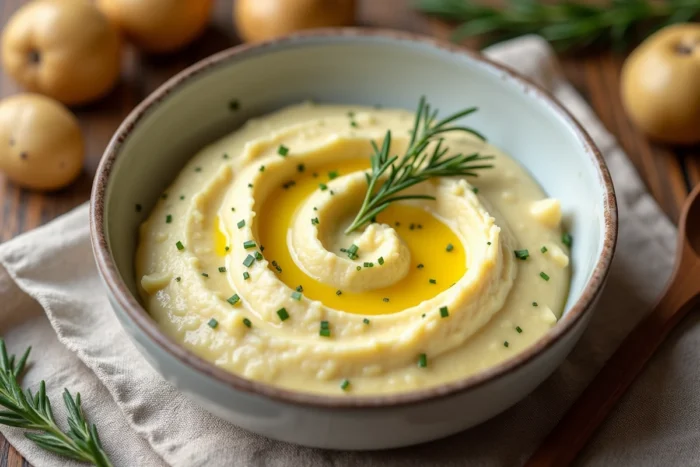
Purée without squash and without sweet taste: which vegetables to favor
Excluding pumpkin is not always enough. Many results will suggest butternut, acorn squash, or sweet potato, ingredients that share the same sweet flavor profile. For those who want to avoid this taste, it is necessary to identify vegetables with a neutral or distinctly savory profile.
Root vegetables with a smooth texture
Potatoes remain the most reliable base for achieving a perfectly smooth purée without residual fibers. Their starch content allows for a natural creaminess, especially with floury varieties. Cooking in salted water followed by passing through a food mill (not a blender, which makes the texture sticky) yields a homogeneous result.
Celery root adds a more pronounced, slightly aniseed flavor that strays radically from the sweet register of squashes. Mixed in equal parts with potato, it produces a stable purée that does not release water onto the plate.
Green vegetables and lesser-known alternatives
Blended green beans after steaming yield a bright green purée, suitable for both young children and adults. The chayote, sometimes called christophine, is an interesting autumn alternative: its neutral and low-fiber flesh is perfect for purée, gratin, or velouté, without adding sweetness.
- Floury potatoes: maximum creaminess, neutral taste, no perceptible fiber after passing through a food mill
- Celery root: aniseed flavor, dense texture, pairs well with cream or butter
- Chayote: watery and neutral flesh, ideal for a light purée without sweet taste
- Green beans: colorful purée, straightforward vegetable profile, fine texture after blending
Smooth texture without squash: cooking and finishing techniques
Choosing the vegetable is only half the battle. The final texture depends as much on the preparation method as on the ingredient itself.
Steaming preserves the integrity of the vegetables better than boiling, where they soak up liquid and produce a purée that is too runny. For celery root and chayote, steaming also prevents diluting the flavors.
Using a food mill with a fine grid remains the most effective technique for eliminating fibers without altering the starch. An immersion blender may work for green beans or chayote, whose flesh is naturally low in fiber, but it turns potatoes into glue.
The addition of fat: a technical role
Cream or butter are not just for enriching flavor. They play an emulsifying role that stabilizes the texture and prevents the purée from retracting as it cools. A drizzle of semi-skimmed milk, added gradually, allows for adjusting the consistency without drowning the result.
For a fat-free version, oat milk (more neutral than soy milk) can replace cream. Adding a hint of nutmeg or curry enhances the flavor without bringing sweetness.

Filtering recipes on cooking sites: often overlooked sorting functions
Beyond search engines, recipe platforms have internal filters that allow for refining results. Few users take advantage of these options, which explains the frustration with results saturated with pumpkin.
- On most aggregators, an “exclude ingredients” filter exists in advanced search
- Seasonal tags (autumn, winter) default to squashes: it’s better to search by type of dish (“purée,” “mashed”) rather than by season
- Some sites allow saving a dietary profile that automatically excludes ingredients with each search
Combining the exclusion operator from the search engine with the internal filters of the site yields the most precise results. This reduces the background noise of squash-based recipes right from the first page.
Finding a purée without pumpkin, without sweet taste, and without fibers is not complicated once you master two levers: the right search operators to filter recipes, and the choice of vegetables whose flavor profile and texture precisely meet what you are looking for. Potatoes, celery root, or chayote cover the ground well, each with its own character.