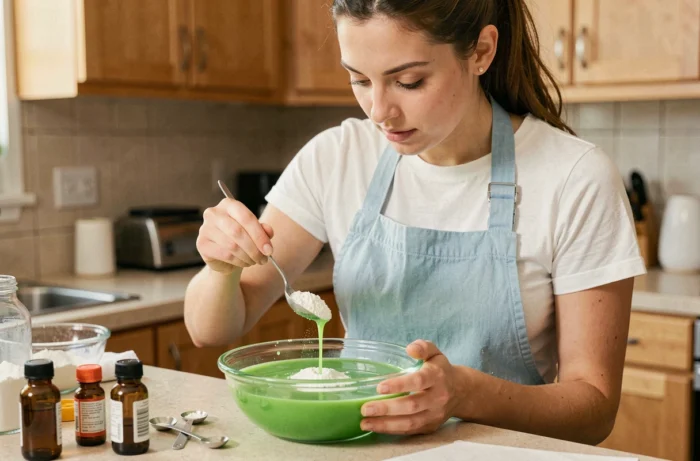
The slime has just been mixed, the children have their hands in it, and the paste is flowing like soup. We all know that moment when the workshop threatens to end abruptly. Before looking for borax or lens solution, there are simpler methods to thicken overly liquid slime, without chemicals, using what can be found in a kitchen cupboard.
Thickening slime without chemical activator: zero-risk solutions
When leading a workshop in class or making slime with little ones, borax and saline solutions pose a real problem. These products irritate the skin, and measuring them down to the milliliter is unrealistic with four-year-old hands. We need solutions where an overdose does not cause burns or skin reactions.
Cornstarch is the first reflex to have. Sprinkle in a teaspoon at a time, then knead thoroughly before adding more. Incorporating the cornstarch completely before adding more prevents breaking the texture of the slime and ending up with a dry, crumbly ball. Baby powder works on the same principle for slightly sticky slime.
If you are looking for how to fix overly liquid slime with common ingredients, cornstarch remains the most reliable option in a school or family context. It thickens gradually without changing the color or elasticity of the paste.
Baking soda offers a complementary alternative. First, mix it in very little warm water to form a paste, then integrate it into the slime in small amounts. The result is a bit less stretchy than with cornstarch, but the texture remains pleasant to the touch.
Chilling: quick fix for overly soft slime
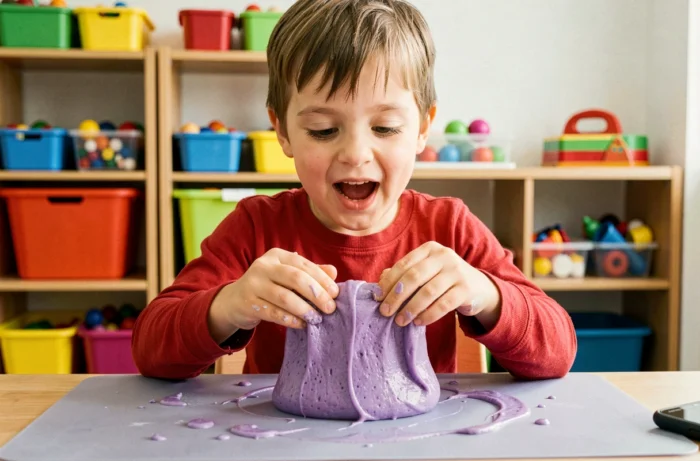
Before altering the composition of the slime, a mechanical trick is worth testing. A short stint in the refrigerator temporarily firms up the paste and makes it easier to work with. Place the slime in a closed container, let it cool for about fifteen minutes, then knead it as soon as it comes out.
The freezer also works, but for an even shorter time. The goal is not to freeze the slime, just to firm it up enough to assess whether it really needs an addition or if it was simply too warm (handled for too long by sweaty hands, for example).
This method has its limits: if the slime becomes liquid again after a few minutes of handling, the problem lies with the initial measurement, and you will need to switch to cornstarch or baking soda. Feedback on this point varies depending on the base recipe used.
Cornstarch, baking soda, or baby powder: which thickener to choose based on the recipe
Not all slimes react the same way. A white glue-based slime does not absorb cornstarch like a slime made with shower gel or dish soap. Here are the combinations that work best in practice:
- White or clear glue slime: diluted baking soda acts as a gentle activator, thickening without making the paste brittle
- Glue-free slime (dish soap, shower gel): cornstarch is the best choice, compensating for the lack of polymer and giving body to the texture
- Fluffy slime with shaving cream: baby powder corrects the sticky aspect without weighing down the foam, provided you knead thoroughly between each addition
In all cases, add the thickener in micro-doses, a maximum of half a teaspoon. The classic trap: pouring a large amount all at once and ending up with a hard ball that is impossible to stretch. The slime can go from too liquid to too compact in a matter of seconds if the dosage is forced.
Successfully running a slime workshop with children: mistakes that make the paste liquid
Fixing a failed slime is good. Preventing it from becoming one is better. In workshops, the causes of overly liquid slime are almost always the same.
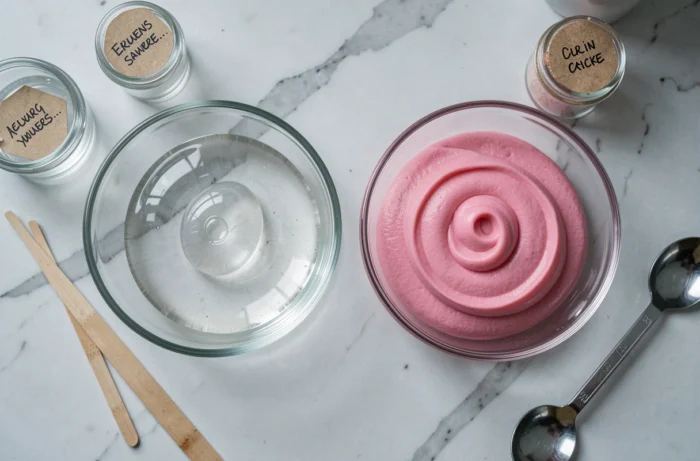
The “eyeballing” measurement is the primary culprit. Children generously pour dish soap or shower gel, and the liquid quickly exceeds the amount of binder. A simple guideline: prepare the doses in advance in small individual containers for each child, to limit excess.
The order of incorporation also matters. Pouring all the liquid at once into the glue creates a heterogeneous mixture that is difficult to fix. Adding the liquid gradually while mixing between each addition yields a much more homogeneous result.
Insufficient kneading is the second culprit. A slime that seems liquid after two minutes of mixing with a spoon can become perfect after five minutes of kneading by hand. Young children tire quickly, but this step is the most crucial for the final texture.
- Pre-measure ingredients into separate cups for each participant
- Mix with a spoon before moving on to manual kneading
- Let the slime rest for two to three minutes if the texture still seems unstable after kneading
- Keep cornstarch handy as a “first aid kit” on the workshop table
Food coloring, added in large quantities, also adds extra liquid. A few drops are enough. Beyond that, you dilute the preparation without realizing it.
A well-kneaded slime with measured doses almost never needs correction. Most failures come from excess liquid combined with too short a kneading time. Keeping a pot of cornstarch on the table remains the best assurance for turning a slime workshop into a success, even with the littlest ones.