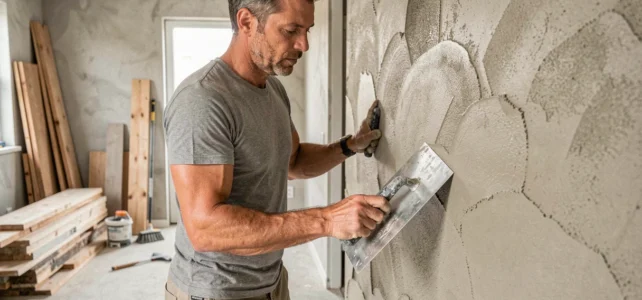
Interior renovation refers to all interventions that modify the structure, networks, or finishes of an existing home. Successfully carrying out renovation and interior design work requires coordinating different trades, adhering to a constantly evolving regulatory framework, and managing a budget that often spirals out of control due to a lack of technical foresight.
Energy renovation and interior design: two projects now linked
Redistributing the rooms of a home without touching its thermal envelope may seem sufficient. Current regulations say otherwise. The Climate and Resilience Law of August 22, 2021 gradually prohibits the rental of the most energy-consuming homes: properties rated G from 2025, F in 2028, and E in 2034.
A landlord who renovates their kitchen and redistributes their living room without improving insulation or heating risks ending up with an un-rentable property in the short term. The energy audit, mandatory for the sale of homes rated F or G since April 2023, clearly exposes the weaknesses of the building.
At the same time, MaPrimeRénov’ is shifting towards extensive renovation rather than isolated actions. Financial aid for a simple window replacement or partial insulation is decreasing. Planning an interior renovation project without integrating the energy aspect amounts to financing two successive projects instead of one. A comprehensive approach, such as the work proposed by Perspective Maison, allows for the combination of design and thermal performance in a single coordinated operation.
Order of renovation work: the technical sequence to follow
The first instinct on an interior project is to demolish what needs to be demolished, then to rebuild in a precise order. Working in reverse generates costly rework and additional delays.
Structural work first
Opening or closing load-bearing walls, floor reinforcement, creating a staircase opening: these interventions create mechanical constraints on the rest of the building. They must be completed before touching the networks.
Technical networks second
Electricity, plumbing, ventilation, and heating come after the structural work and before the finishes. Running ducts in a wall that has already been plastered requires everything to be reopened. Networks should be installed on the bare structure, never after the coatings.
Insulation, partitioning, then finishes
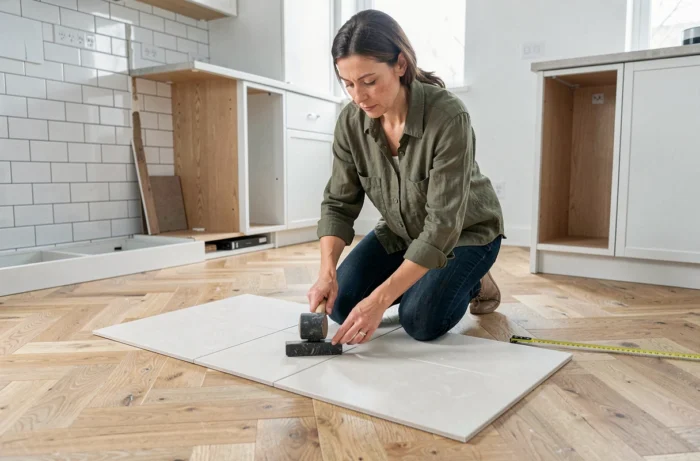
Insulating the walls from the inside and partitioning occur once the networks are in place. The finishes (painting, flooring, tiling) come last. The tiles are laid before the baseboards, and the wall painting is done before the woodwork.
Following this sequence avoids a common pitfall: having to remove a new floor to access a forgotten pipe.
Interior renovation budget: anticipate the invisible costs
Most budget overruns do not come from choosing a more expensive tile. They stem from items not mentioned in the initial quote or underestimated by the owner.
- Bringing electrical systems up to code: an outdated panel or ungrounded circuits necessitate a complete overhaul, rarely included in an initial remodeling quote
- Dealing with humidity: mold behind a lining, rising damp in an old wall, condensation due to absent ventilation. These issues only reveal themselves after the removal of old coverings
- Managing construction waste: rubble, plaster, treated wood. Their disposal at a professional waste facility represents a logistical cost often overlooked
- Prior diagnostic fees: asbestos before work (mandatory for buildings with a building permit issued before July 1997), lead, termites depending on the geographical area
Allowing a safety margin in the total budget helps absorb these unforeseen expenses without halting the project midway.

Choosing craftsmen and coordinating the project
An interior design project rarely involves just one trade. Mason, electrician, plumber, drywall installer, painter, tiler: each one intervenes at a specific stage. The delay of a single craftsman pushes back all subsequent ones.
There are two options for management. The first is to hire a project manager or interior architect who coordinates all the participants, validates technical compliance, and manages the schedule. The second relies on the owner themselves, who contacts each professional separately and organizes the interventions.
Coordination by the owner works for a limited project (one room, one technical lot). As soon as the project involves the structure, networks, and finishes simultaneously, the lack of professional coordination multiplies interface errors between trades.
Check qualifications before signing
A qualified RGE (Recognized Guarantor of the Environment) craftsman is required to access public aid for energy renovation. This qualification does not guarantee competence in decorative design, but it is necessary for tasks related to insulation, heating, or ventilation.
- Request a valid ten-year insurance certificate
- Check registration in the trades register or commercial register
- Compare at least three detailed quotes, item by item, before committing
A quote that does not detail the supply, labor, and ancillary services (disposal, cleaning, protection of unaffected areas) should be disregarded.
Advertising and energy renovation: a new obligation for professionals
A decree published on June 30, 2025, mandates that starting October 1, 2025, any professional advertising energy renovation work must mention the public service France Rénov’. This measure aims to guide individuals towards neutral support before signing with a craftsman or company.
For the owner launching a renovation project, this obligation signals compliant professionals. A craftsman offering insulation or heating work without mentioning France Rénov’ in their advertising materials after this date is not adhering to current regulations.
Interior renovation is no longer just about choosing a wall color or a type of flooring. Every aesthetic decision now has a technical and regulatory consequence. Cross-referencing the design project with the energy diagnosis of the home remains the most reliable way to avoid a project that needs to be redone in five years.