
Chicken provides complete animal proteins that are low in fat, in a format that most seniors tolerate well digestively. As one ages, muscle mass gradually decreases, and daily protein intake becomes a direct lever to slow this loss. Understanding what chicken actually provides, and under what conditions it remains relevant, allows us to go beyond the simple advice of “eat protein.”
Sarcopenia and Protein Needs After 60: What Geriatric Guidelines Indicate
Sarcopenia refers to the progressive loss of muscle mass and function related to aging. This phenomenon accelerates after the age of 60 and increases the risk of falls, fractures, and loss of autonomy. Nutrition alone is not enough to stop it, but it forms a foundation without which resistance exercises lose some of their effectiveness.
The European guidelines published by ESPEN set the protein target between 1.0 and 1.2 g per kilogram of body weight per day for healthy seniors. In cases of acute illness, chronic disease, or proven malnutrition, this guideline rises to 1.2 to 1.5 g/kg/day. For a person weighing 65 kg, this represents a significant daily intake, difficult to achieve with just one protein-rich meal.
A often-overlooked point: the distribution of protein throughout the day is as important as the total amount. Concentrating intake at dinner limits muscle synthesis. Distributing protein sources across breakfast, lunch, and dinner optimizes absorption, as highlighted by health advice on Cap Bien-être detailing the role of chicken in this nutritional strategy.
Nutritional Profile of Chicken: Proteins, Vitamins, and Limitations to Know
Chicken breast stands out for its high protein density and low saturated fat content. Most of the poultry’s fat is concentrated in the skin. By removing it before cooking, one obtains lean meat that is low in calories, suitable for diets where weight control is a goal alongside muscle maintenance.
Beyond proteins, chicken provides B vitamins, particularly B3 (niacin) and B6, which are involved in energy metabolism and nervous system function. Its iron content, while moderate compared to red meat, remains interesting within a varied diet.
What Chicken Does Not Cover
Chicken does not provide significant amounts of calcium, vitamin D, or omega-3. However, these three nutrients are among the common deficiencies in older adults. Relying solely on poultry to meet protein needs neglects other nutritional priorities with age.
Alternating chicken, fatty fish, eggs, dairy products, and legumes remains the strategy recommended by recent geriatric syntheses. Fatty fish provides the omega-3s absent from chicken, dairy products cover part of the calcium needs, and legumes add fiber, which is often insufficient in seniors’ diets.
Protein-Rich Meals for Seniors: How to Integrate Chicken into Daily Life
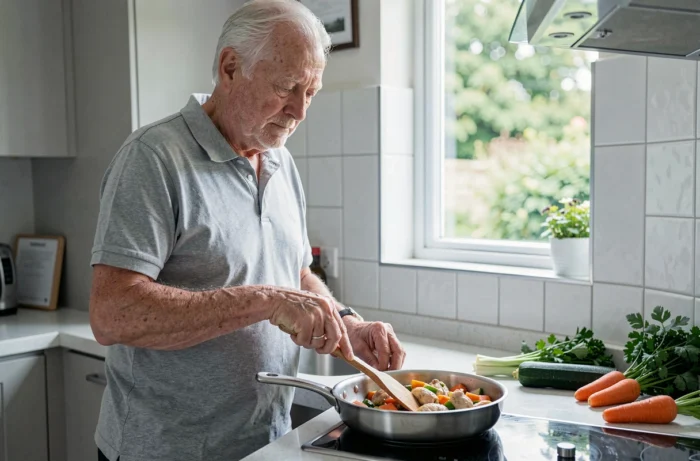
The main obstacle to sufficient protein intake among older adults is not a lack of information. It is the loss of appetite, difficulties in chewing, and food fatigue. Chicken, thanks to its tender texture (especially breast cooked at low temperatures or stewed), addresses several of these constraints.
Here are some concrete principles to make the most of chicken in daily meals:
- Plan a portion of poultry at lunch rather than at dinner, a time when appetite is often reduced in seniors. Complementing dinner with an egg or dairy product enriches the protein distribution throughout the day.
- Favor long, moist cooking methods (broth, stewing, en papillote) that tenderize the meat and facilitate chewing, a real barrier for those wearing dentures.
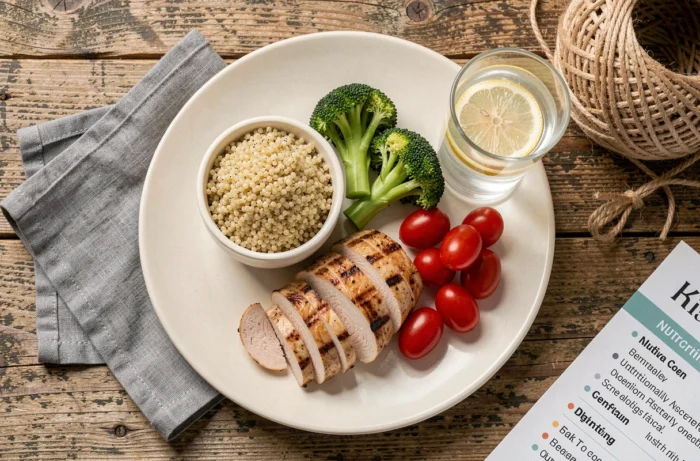
- Pair chicken with fiber-rich vegetables (green beans, zucchini, carrots) and a source of whole grains to create a balanced meal that covers multiple nutritional needs simultaneously.
Chronic Kidney Disease: A Case Where Medical Advice Prevails
General recommendations on protein do not apply uniformly. In the presence of chronic kidney disease, protein restriction may be considered to slow the progression of the condition. Conversely, reducing protein in a fragile older adult without kidney impairment risks worsening malnutrition and muscle loss.
This tension between renal protection and sarcopenia prevention requires individualized medical monitoring. Increasing chicken consumption without prior evaluation of renal function can be counterproductive.
Animal and Plant Proteins After 60: Should We Choose?
A predominantly plant-based diet remains compatible with seniors’ needs, provided that sources are planned to be sufficiently concentrated in protein. Legumes (lentils, chickpeas, dried beans) provide plant proteins, but their amino acid profile differs from that of animal proteins. Combining them with whole grains partially compensates for this gap.
Chicken does not need to be presented as superior to other sources to justify its place in seniors’ diets. Its value lies in its practicality, affordability, digestibility, and versatility in cooking. Two to three servings of poultry per week, combined with fish, eggs, and plant proteins, form a realistic foundation.
The question of protein intake after 60 is not just about choosing one food. It involves meal regularity, source variety, adaptation to chewing capabilities, and, in some cases, a prior medical assessment. Chicken facilitates this equation without solving it alone.