
Renting a vehicle in Tourcoing is not just about comparing daily rates. The DGCCRF recorded about 2,600 reports related to car rentals in a recent year, which is over 1,000 more than the previous year. Disputed repair costs, security deposits blocked for several months, damages attributed without proof: the risk of disputes is now structurally higher. Understanding the contractual mechanisms before signing makes a difference.
Deductible and deductible buyback: the item that rental companies explain poorly
The rental deductible refers to the amount that remains the responsibility of the renter in the event of a claim. It is stated in the contract, sometimes in small print, and can reach several hundred euros even for a minor bump.
The deductible buyback, offered as a paid option at the counter or online, reduces this amount to zero (or nearly). The instinct to refuse this option to save a few euros per day exposes you to a much heavier bill in case of damage noted upon return.
Before finalizing a vehicle rental in Tourcoing, check if your credit card already includes car rental insurance. Some premium cards cover the deductible under certain conditions (full payment of the rental with the card, reporting within a specific timeframe). In this case, the buyback offered by the rental company becomes redundant.
Two points to systematically check in the contract:
- The exact amount of the deductible by type of damage (bodywork, glazing, tires, interior), as some contracts apply different deductibles depending on the nature of the claim
- The exclusions of coverage, particularly damages to the undercarriage, roof, or rims, often excluded even with deductible buyback
- The dispute procedure if damage is attributed to you upon return, including the timeframe to report a disagreement
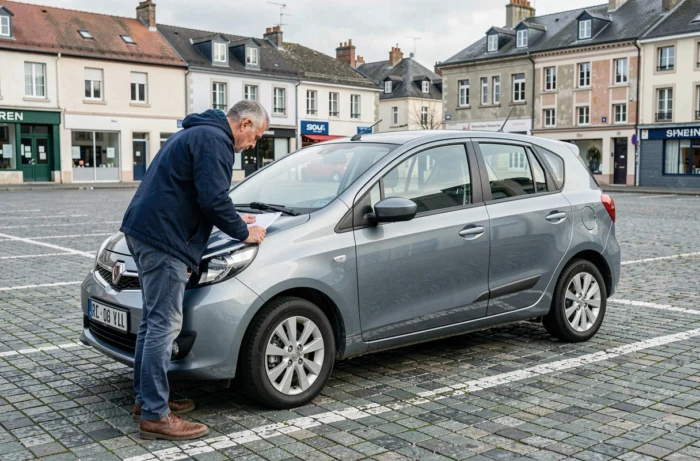
Vehicle condition report: the only truly effective protection
The majority of disputes reported to the DGCCRF concern repair costs charged after return. The typical scenario: the renter returns the vehicle, receives a bill a few days later for a scratch or impact they did not cause, and discovers that their security deposit has been deducted.
The contradictory condition report at departure constitutes the only opposable proof. The paper or digital document signed by both parties is valid in case of dispute.
Method for an exploitable condition report
Photograph the vehicle from all angles before leaving the parking lot: all four sides, the roof, the rims, the windshield, the dashboard, and the trunk. Timestamp each photo (most smartphones do this automatically). A dated photo is worth more than a hastily checked paper form.
Upon return, demand a condition report in the presence of an agent. If the agency allows return in a mailbox (key drop-off outside of hours), film the vehicle parked in the indicated spot. This type of return without contradiction is precisely what generates the most disputes.
Blocked deposit: legal framework and recourse in Tourcoing
The rental company usually takes a credit card imprint at pickup. This car rental deposit can remain blocked for several weeks, or even months in case of a dispute. An article in Le Monde published in August 2026 raised the question: can a rental company keep a deposit of 2,000 euros for several months?
The short answer: yes, as long as a disagreement about the condition of the vehicle is not resolved. The practical answer: without photographic proof or a signed contradictory condition report, the balance of power leans in favor of the rental company.
In case of a deduction that you consider abusive, three levers exist:
- A written dispute with the rental company’s customer service, including copies of your photos and the signed condition report at departure
- Reporting on the DGCCRF’s SignalConso platform, which forwards the complaint to the company and monitors its handling
- Opposing the deduction with your bank, possible within eight weeks for a SEPA deduction, or via the chargeback procedure for a card payment
Short-term, LOA or LLD: choosing the right rental format
For residents of Tourcoing and the Lille metropolitan area, traditional short-term rental is no longer the only option. Leasing with an option to buy (LOA) and long-term leasing (LLD) are gaining significant traction, with LLD experiencing over 50% growth in a recent period.
The distinction is technical but crucial. Short-term rental is suitable for occasional needs (weekend, business travel, emergency). LOA allows you to drive a new or recent vehicle for several years, with a buyback option at the end of the contract. LLD operates on the same principle, without a buyback option: the vehicle is returned at the end of the term.
What the format changes for the actual budget
In short-term rental, the cost is easy to read: daily rate, insurance, fuel. In LOA or LLD, the calculation becomes more complex. Return restoration fees, penalties for exceeding mileage, and early termination conditions can turn an attractive monthly rent into a total cost well above expectations.
Compare the total cost over the duration of the contract, not just the displayed monthly rent. UFC-Que Choisir has warned about the pitfalls of leasing for individuals, particularly the return clauses that generate unexpected bills.
Specificities of renting in Tourcoing and the Lille metropolitan area
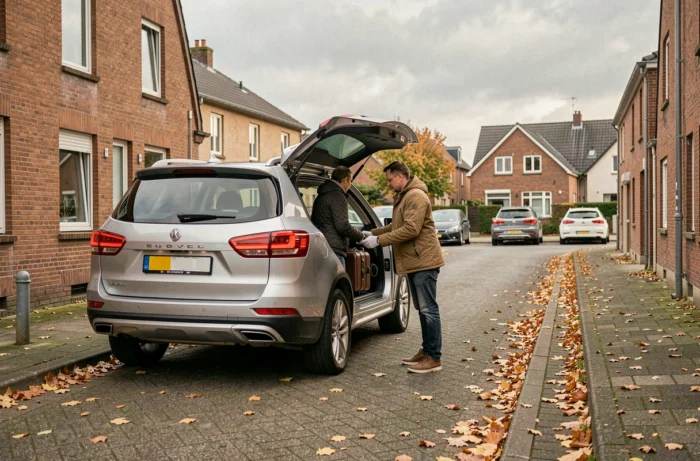
Tourcoing has a TGV station that makes it a frequent arrival point for travelers looking for a vehicle immediately. The proximity to Roubaix, Wattrelos, and the Belgian border expands the usage radius of a rental.
Several national brands (Rent A Car, Free2Move, Hertz) and local or peer-to-peer players (Turo, France Cars) cover the area. The choice between a physical agency in the city and a peer-to-peer rental platform depends on the desired level of insurance coverage. Peer-to-peer platforms generally include insurance, but the coverage limits and deductibles differ significantly from professional rental companies.
Checking the included mileage policy remains relevant for cross-border trips to Belgium, as some contracts charge an extra fee for driving outside of France, even just a few kilometers from the border.
The last useful reflex before signing: reread the fuel return conditions. Some rental companies require a full tank upon return, or they will charge for missing fuel at an inflated rate. Others offer a prepaid fuel package, rarely advantageous unless the tank is nearly empty upon return.