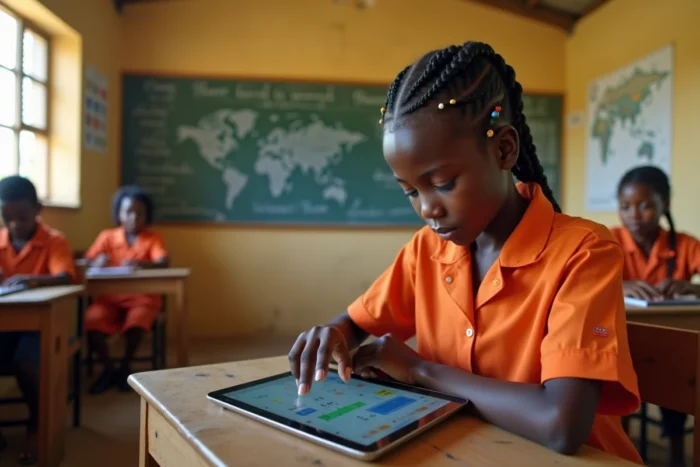
Digital education in French-speaking Africa refers to the set of devices, platforms, and technological tools deployed to teach, train, or support learners through connected media. This definition goes beyond simply providing computers in classrooms. It encompasses online learning environments, educational mobile applications, and, more recently, programs integrating artificial intelligence into teacher training.
The topic has long been approached from the perspective of equipment and connectivity. Several French-speaking countries are now shifting the focus towards a more structuring goal: the ability to locally design educational tools, rather than merely importing turnkey solutions.
Educational digital sovereignty: a strategic shift in French-speaking Africa
The debate on school digitalization in Africa has long revolved around a triptych: connect, equip, train. This approach overlooked a structural question. When platforms, clouds, content, and AI engines are all imported, the education system becomes digitally equipped but intellectually dependent.
Several French-speaking countries are beginning to formalize strategies known as educational digital sovereignty. The goal is no longer just to reduce the digital divide. It involves investing in the training of engineers, researchers, and teachers capable of designing their own software architectures, educational content, and AI algorithms tailored to local realities.
Documentary resources and programs related to this dynamic are available on the Sankore org website, which has supported the dissemination of free educational digital tools in French-speaking Africa for several years.
This shift changes the very nature of the expected investments. Buying tablets is not enough if no local developer can adapt the software to national curricula or the languages of instruction used in the classroom.
Training teachers in AI and advanced technologies
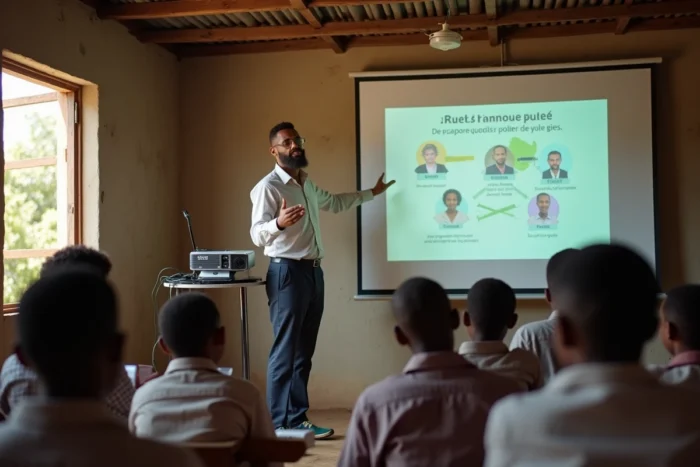
Analyses of African educational digitalization often mention ICT in a generic way. The reality on the ground is evolving faster than this vocabulary. In Senegal, the Ministry of Education has initiated massive training programs for teachers and educational leaders in artificial intelligence, not just in office applications or internet browsing.
This change in focus has direct consequences on teaching practices. A teacher trained in AI can personalize learning paths, identify a student’s gaps through automated response analysis, or produce materials tailored to the actual level of their class.
Training trainers in advanced technologies conditions everything else. Without this foundation, e-learning platforms remain underutilized, computers serve as enhanced typewriters, and investments in infrastructure lose their educational yield.
What AI concretely changes in a classroom
The integration of AI into teacher training is not a gimmick. It addresses a structural problem: the shortage of qualified teachers, combined with very high class sizes in many sub-Saharan African countries.
- Automated assessment analysis allows a teacher managing dozens of students to quickly identify those who are struggling with a specific skill
- Content generation tools help produce exercises calibrated by level, in the language of instruction of the concerned country
- Digital dashboards provide inspectors and school directors with visibility on the actual use of deployed tools
Digital divide in Africa: beyond network coverage
The internet penetration rate in Africa has significantly increased over the last two decades. This overall statistic masks a structural phenomenon: the majority of unconnected individuals live in areas already covered by a mobile network.
The problem is therefore not only technical. It is economic and cultural. The cost of devices, data plan expenses, the lack of relevant content in local languages, and the absence of basic digital skills form an invisible wall that is much harder to overcome than a lack of coverage.
Connectivity and usage: two distinct realities
For education, this distinction changes everything. Deploying an e-learning platform in an area covered by 4G produces no effect if students cannot afford a sufficient data plan, or if the content is only in French while the actual language of instruction in primary school is Bambara, Mooré, or Fon.
The main issue is now economic and linguistic accessibility, not the installation of additional antennas. The countries that progress the most are those that combine infrastructure deployment with policies for subsidizing devices and producing content in national languages.
Concrete initiatives in universities and vocational training
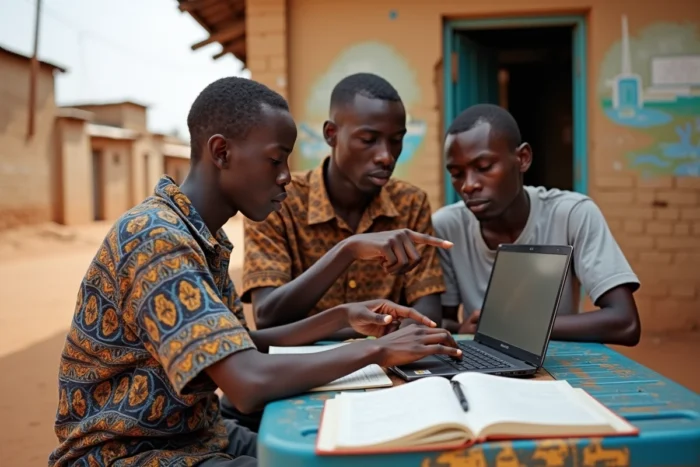
French-speaking African universities serve as an advanced laboratory for this transformation. Models like the Virtual University of Senegal allow thousands of students to access distance learning, reducing pressure on overcrowded physical campuses.
Beyond universities, vocational training also benefits from this dynamic. The OIF and the African Development Bank have launched digital training programs targeting several French-speaking countries, with a focus on skills directly employable in the digital economy.
- Short certified training courses in web development, data analysis, or information systems management are multiplying in French-speaking capitals
- Partnerships between telecom operators and ministries of education fund free access to certain educational platforms (zero-rating)
These initiatives share a common point: they do not limit themselves to providing equipment. They integrate user training and the production of content adapted to the local context.
Educational digitalization in French-speaking Africa is at a tipping point. The question is no longer whether to digitize schools, but who designs the tools and in what language they operate. Countries that invest simultaneously in high-level technical training, local content production, and economic accessibility of devices are laying the foundations for a system that does not entirely depend on external solutions.