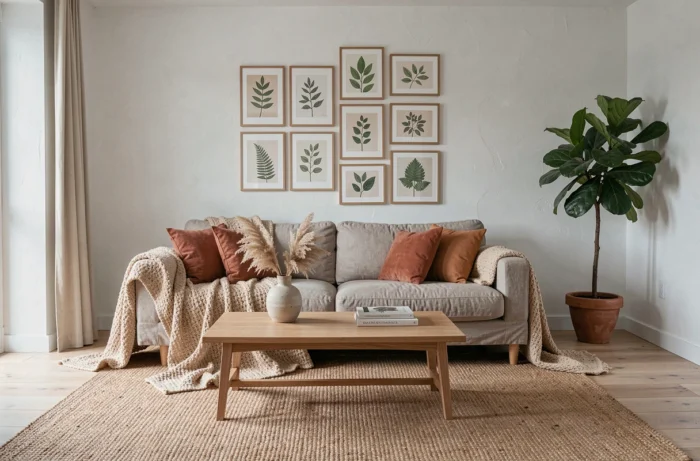
The color palettes of interior decoration in 2026 are no longer limited to a flagship color dictated by a single color chart. White itself has changed in nature: the reference Cloud Dancer by Pantone imposes a sensory off-white that breaks away from the clinical white of previous years. This shift towards luminous yet tempered bases redefines how we conceive color combinations within the same space.
Brass, patina, and warm metals: the shift in finishes in interior decoration
Chrome is losing ground in interior design projects in favor of brass and patinated metals. This shift is not merely a passing trend: it reflects a quest for visual depth that shiny, cold finishes do not provide.
Brushed or aged brass brings a texture that can be perceived even before touching the object. On a furniture handle, a pendant light, or a coffee table leg, the patina creates a controlled irregularity that anchors the piece in a more vibrant register.
We observe that this trend extends to bathroom accessories and kitchen elements, where satin brass faucets are gradually replacing polished stainless steel. Professionals who follow the News Déco website in detail regularly find examples of projects where these warm finishes structure the identity of an interior without resorting to wall color.
The combination of brass and raw materials (stone, polished concrete, untreated wood) works particularly well because it contrasts two registers of warmth: the cold mineral and the golden metal. The contrast remains subtle, far from the golden opulence of classic styles.
Lighting by light scenarios: beyond the simple ceiling light
Lighting has become a full-fledged decoration lever, no longer just a functional complement. The dominant logic in 2026 relies on layering light sources at different color temperatures according to the zones of the same space.
In a living room, this concretely translates into three layers: indirect lighting in a cornice or behind a piece of furniture (warm temperature, around 2,700 K), a reading or accent lamp at seating height, and possibly a sculptural light fixture that plays a more decorative than functional role.
Color temperatures and ambiance
Rest areas benefit from warmer sources, while work or kitchen zones tolerate slightly cooler temperatures. This differentiation is nothing new in professional lighting design, but it is now making its way into common residential interiors.
The choice of the light fixture itself contributes to the style of the room. Suspensions made of textured materials (linen, woven rattan, ceramic) filter light and create cast shadows that alter the perception of volumes. A single central ceiling light flattens the space, whereas three offset sources create depth without touching the walls.
Modular furniture and hybrid spaces: responding to space constraints
The multifunctionality of furniture is no longer reserved for micro-apartments. It now structures the offerings of both mainstream and design furniture publishers. Repositionable modular sofas, extendable tables with integrated mechanisms, storage hidden in seating: single-use furniture is on the decline.
This movement responds to the proliferation of hybrid spaces. A living room that also serves as an office, a bedroom that accommodates a reading nook or a workout area: furniture must adapt to uses that change throughout the day.
- Modular sofas allow for reconfiguring seating based on the number of people or the activity (movie, conversation, working on a laptop).
- Extendable consoles replace fixed dining tables in spaces of less than thirty square meters, freeing up surface area on a daily basis.
- Open wall-mounted shelves serve as both storage, a visual separator between two zones, and a decorative support.
We recommend prioritizing pieces whose modularity relies on a simple mechanism rather than complex engineering. A sofa module that moves by hand ages better than a system with metal slides that eventually gets stuck.
Artisanal materials and raw textures: what sustainable style really changes
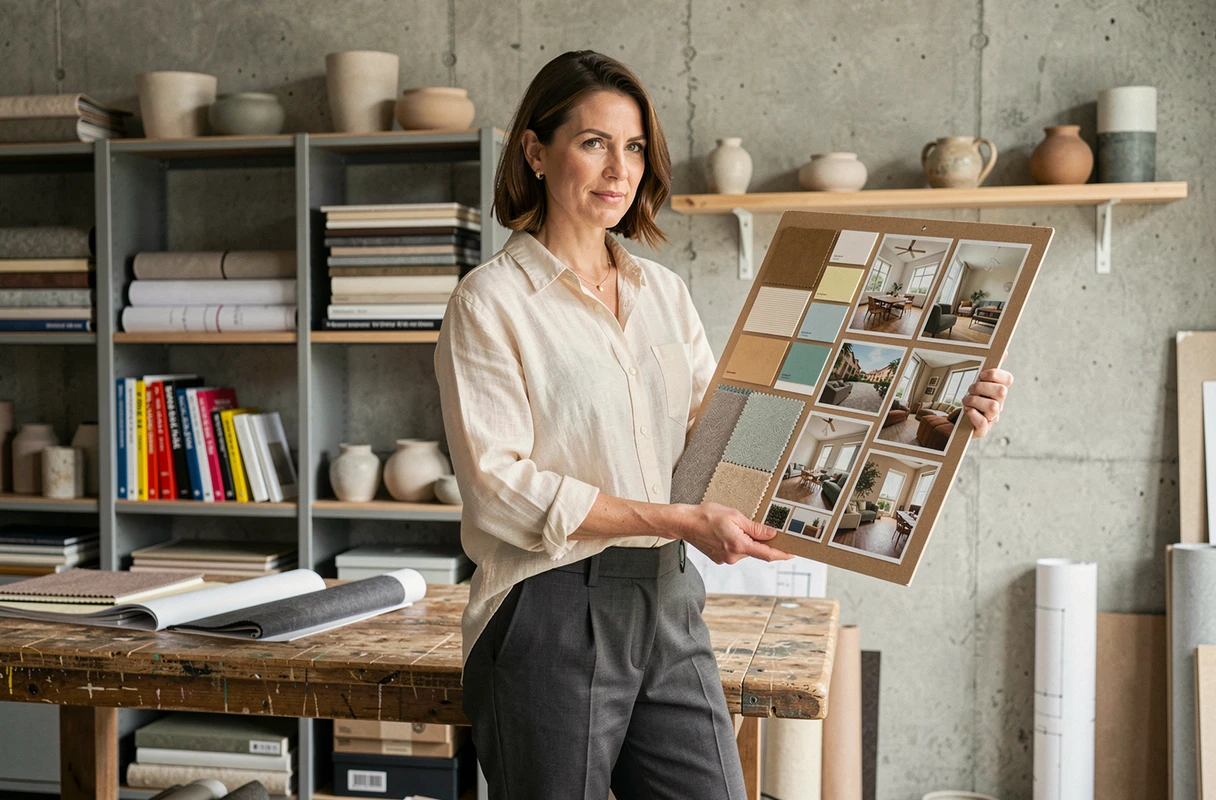
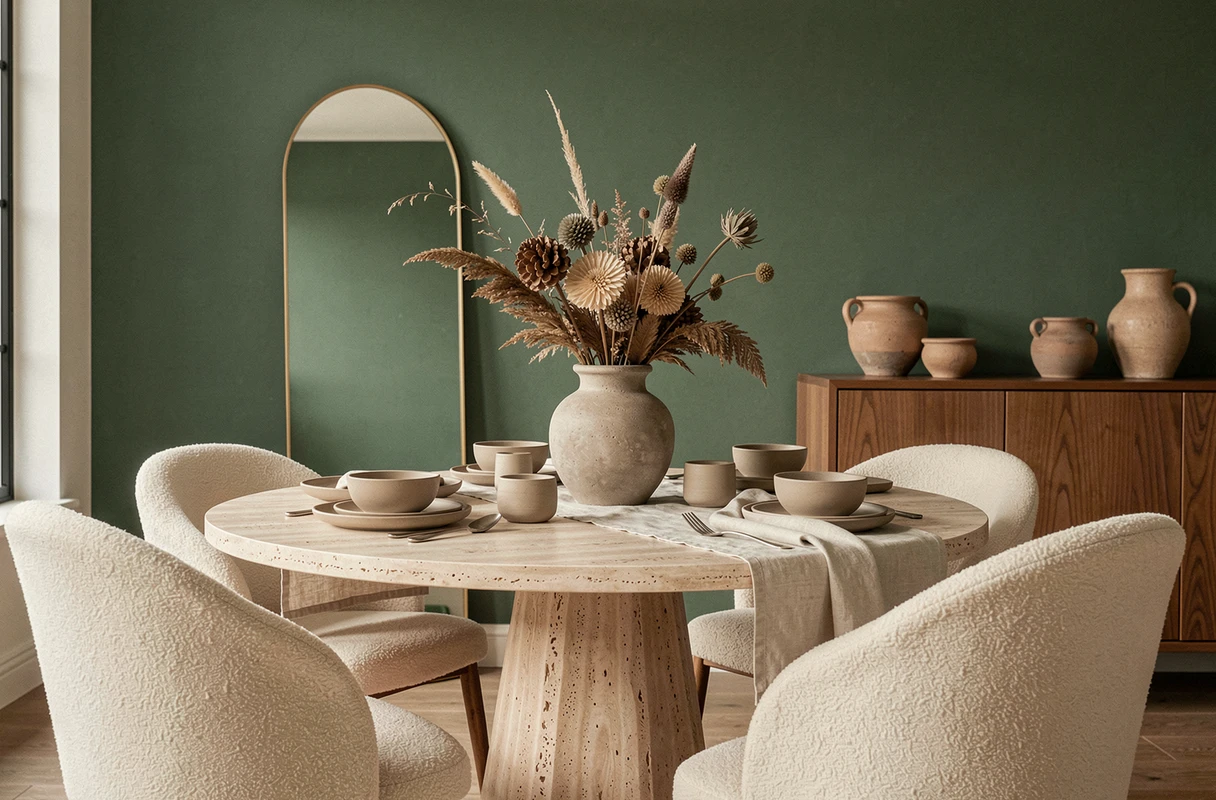
The artisanal aesthetic that dominates current interior decoration goes beyond simply placing a handmade ceramic vase on a shelf. It alters the relationship with the surfaces themselves: lime plasters, wood left raw or simply oiled, wrinkled unpressed linen on upholstery textiles.
Natural materials are no longer just a style among others but a marker of value. A solid wood piece with visible knots or a reconstituted stone table with variations in hue communicates an intention of sustainability that melamine wood imitation cannot replicate.
Earthy colors and muted palettes
The shades accompanying these materials remain in a register of earthy colors: clays, sands, terracottas, muted greens. These palettes work because they share a common pigment base with the materials they dress. An ochre wall will always resonate better with a light oak piece than a charcoal gray wall.
This chromatic coherence between surfaces, furniture, and decorative objects constitutes the guiding thread of the most refined interiors in 2026. The accumulation of disparate design objects gives way to ensembles thought out by material register and color temperature.
This year’s interior decoration is distinguished less by spectacular breaks than by a deepening of trends initiated over several seasons. Sensory comfort now takes precedence over immediate visual effect: crafted light, patinated finishes, furniture that adapts to real life rather than to a photo. This is a more reliable criterion for choice than a color of the year.